My research sits broadly within Roman history and material culture, but these interests often converge at the crossroads of ancient history, philology, art history and archaeology.
Beyond Roman history (cultural, social, political), material culture, and the various ways I approach the history of youth and age(ing), I also have interests in the history of:
Displacement, migration and place in the ancient (and contemporary) Mediterranean;
Roman subaltern groups and their history, especially enslaved and freedpersons;
Space, navigation and identity in Roman urban contexts;
Roman colonization;
Roman art and architecture (portraiture, wall painting, somatology, viewership);
Ancient gender, queerness, and performance theory (I am also a steering committee member of the Gender Studies program at Rutgers - Camden);
Oratory and politics in the Roman Republic, especially the fragmentary orators;
Roman villa culture (archaeology, texts, art, architecture);
Memory studies;
Currently I am at work on three major research strands:
Youth and Power: Acting Your Age in the Roman Empire (149 BCE - 79 CE)
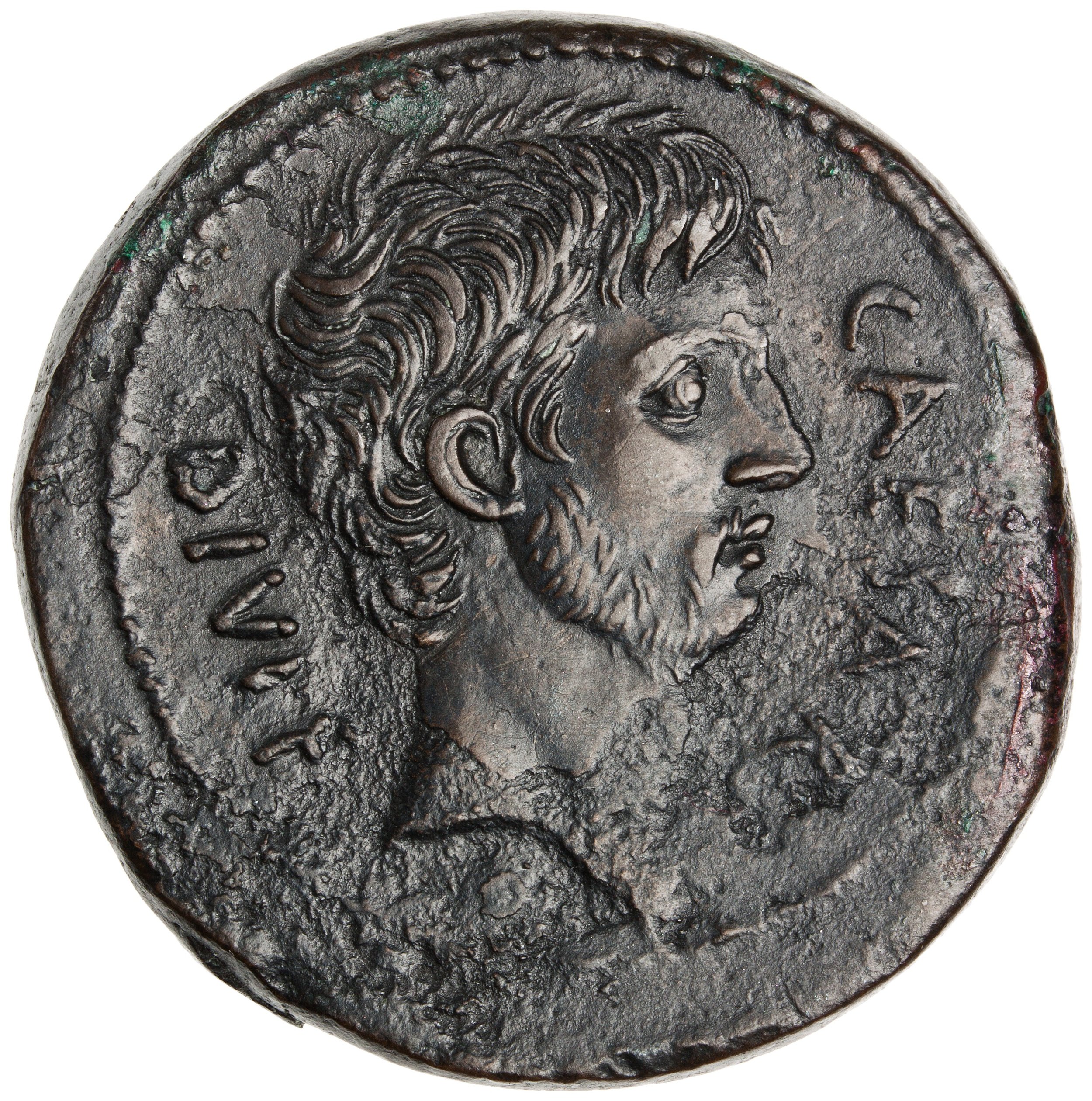
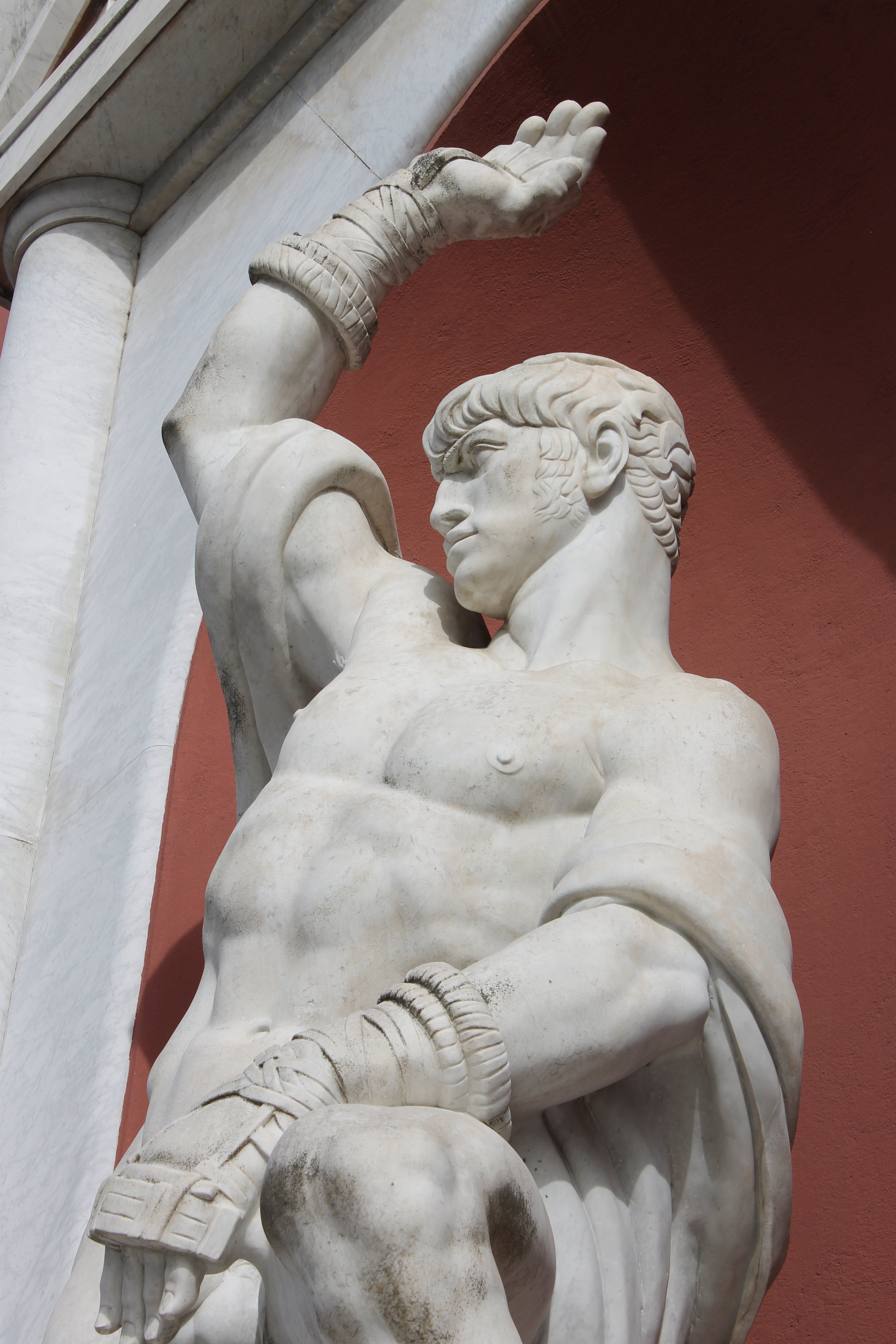
Currently I am finishing up my first monograph tentatively entitled, Youth and Power: Acting Your Age in the Roman Empire, 149 BCE – 79 CE (under contract with Oxford University Press). It takes age, specifically youth, as something that can be performed (i.e., “acting your age”, or not), much like gender, and traces how these performances changed over two hundred years, due to a whole range of historical factors, from demographic conditions to legal and artistic developments. I’m also at work on, or have forthcoming, a number of book chapters and articles arising from this project.


Subaltern Topographies of Ancient Rome:
Wayfinding and the Making of Spatial Identities in Roman Urban Space
My next major project, currently in its early stages, looks at non-elite and sub-elite spatial identities and modes of spatial perception in Roman urban contexts, as represented in both documentary (primarily graffiti and inscriptions) and literary texts in conversation with archaeological contexts and visual media. It seeks to recover a “subaltern” (primarily enslaved, freed, and working class) topography of Rome, as well as other Roman urban sites, and evaluate how this squares with elite articulations of the urbs and its topography. A broader project, in development for Cambridge University Press’ Key Themes in Ancient History, will offer historical treatment of the applicability of subaltern studies to Roman studies, under the tentative title of Subaltern Romans.
Migration, Colonization and Displacement in the Ancient Mediterranean
From 2017 to 2023 I co-edited with Professor Elena Isayev (Exeter) a Special Issue of the journal, Humanities (Displacement and the Humanities: Manifestos from the Ancient to the Present) on an ongoing basis. It was released as a print publication in Fall 2023. The volume explores the theme of displacement from both the contexts of the ancient world and the contemporary phenomenon. It is innovative and dialogic in its structure, combining stimulus pieces ("Catalysts") from practitioners working in the contemporary field of displacement, with academic papers from scholars working on the ancient phenomenon, and finally, responses to these papers from scholars outside of the immediate field of those scholars.
As a part of this volume I published a paper on Roman colonization as a mechanism of “domestic displacement”, that is, as a way to remove “undesirable” groups from the city of Rome, namely the plebs, but especially freedpeople. I am continuing to pursue threads from this project in a follow-up article on the exploitation of freedpeople in Middle Republican and Caesarian-Augustan colonization efforts, and eventually a book length project which will rethink the history of Roman colonization from the angle of freedpeople as colonists.
My interest in migration and displacement is also being continued with a major, international co-edited volume with Routledge (with seven other editors: Mobility and Migration in Antiquity: Rethinking the Ancient World through Movement, in press) on migration and mobility in the ancient world. It will represent the first major volume on this topic and aims to push the field in new directions, from bioarchaeology to critical theory.
Other projects
Embodied approaches to Roman art and architecture
I have an abiding interest in the Roman body, enslaved bodies and their histories, especially in terms of the embodied experience of viewing art in spatial contexts, and to this end I have presented about the pygmy-dwarf motif in Roman art as a representation of the enslaved dwarf and how it is deployed in Pompeian households as a somatic provocation in dialogue with other body types (article publication in preparation).
Roman villa-culture

On site in the so-called "Lararium" at the Villa Adriana, Tivoli, Italy. June 2014.
In general, my historical research integrates material culture with the literary sources wherever possible. To this end, I have also participated (2014, 2016) in Columbia University's (APAHA) excavations at the UNESCO World Heritage site, the Villa Adriana (Hadrian's Villa), at Tivoli, Italy. This fieldwork has grounded my research as an historian in an understanding of archaeological processes, documentation, data, and conservation, as well as artefact studies. My involvement in this project has inspired two recently published article projects (in Historia and Memoirs of the American Academy in Rome) on the literary production which articulated the villa as a site of elite self-fashioning during the Republic and Principate.
Roman oratory, cultural memory and late Republican political ideologies
I have presented several papers on Ciceronian and fragmentary Republican oratory and its use of cultural memory. One of these was published in 2018 and another was published in 2023, both in Cambridge University Press volumes. My book project also deals with Republican oratory as a a historical driver for the emergence of new "scripts" for young men at Rome and as a site for their negotiation.